
REVIEW · HISTORICAL TOURS
Miami Cocaine Capital in the 80’s- History tour-
One city, one decade, and a lot of cash stories. This Miami Cocaine Capital in the 80’s History tour uses Coconut Grove landmarks and a convertible Jeep ride to connect the drug-war headlines to how the city actually looked, built, and moved money. I especially love the mix of skyline views and real-world details that explain how crime and development got tangled, and I also like the way the tour brings the Mutiny Hotel at Sailboat Bay era to life with concrete, memorable facts.
You’ll get a tight, hour-long route that stays focused on a single historical slice of Miami. One thing to keep in mind: there’s no bathroom on the tour, so plan accordingly before you meet up.
In This Review
- Key moments that make this tour worth your time
- Miami in the 1980s: why this tour stays in one tight story
- Price and group size: $75 for up to four in a small ride
- Start at David T. Kennedy Park, then head straight into Coconut Grove
- Skyline views and the money math: real estate meets drug trade
- Vizcaya Museum and Gardens: European beauty with a theft case attached
- Coconut Grove and the peacocks: the neighborhood behind the headlines
- Marinas as drug routes: speed, patrol limits, and old tactics
- Miami City Hall’s flying-boat past: Pan Am to local power
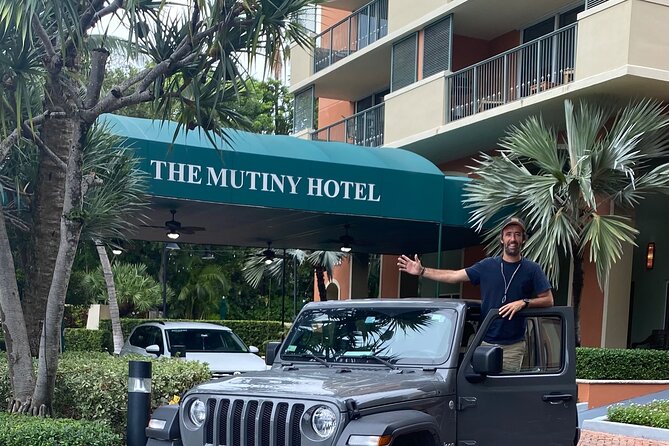
- The Mutiny Hotel at Sailboat Bay: where money, power, and celebrities crossed paths
- What you’ll actually experience: music, water, and no-bathroom reality
- Should you book this Miami Cocaine Capital in the 80’s tour?
- FAQ
- How long is the Miami Cocaine Capital in the 80’s History tour?
- How much does the tour cost?
- Is the tour private or shared?
- What’s included in the tour?
- Is there a bathroom available during the tour?
- Where do we meet, and where does the tour end?
- Do I need to bring a printed ticket?
- What if the weather is bad?
- What is the cancellation policy?
Key moments that make this tour worth your time
- Convertible Jeep ride that keeps the story moving as you look out over key Miami areas
- Real estate vs. drug money numbers (real estate at about $9 billion a year, drug trade estimated at about $12 billion)
- Vizcaya Museum and Gardens with the 1971 theft story tied to its opulence
- Coconut Grove details, including chances to spot peacocks roaming freely
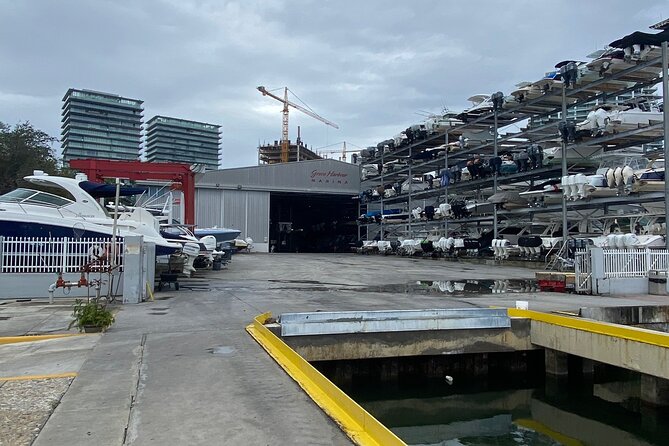
- Marinas as distribution channels, with an explanation of how speed helped drug runners evade patrols
- The Mutiny Hotel’s height of power, including the image of armored trucks and Dom Pérignon sales
Before you lock in this Miami trip, weigh these up too:
- Award-winning Art Deco & History Walking Tour in Miami Beach
★ 5.0 · 138 reviews - Miami Beach Art Deco & History Bike Tour with Design Enthusiast
★ 5.0 · 135 reviews - Miami Small Group Boat Tour: History, Wildlife, and Stiltsville
★ 5.0 · 65 reviews - Miami Beach Food & History Tour In Sobe
★ 5.0 · 49 reviews
Miami in the 1980s: why this tour stays in one tight story
Miami has a lot of ways to tell its story: immigration, design, beaches, spring breaks, and even art deco sunsets. This tour chooses a sharper theme—the early 1980s cocaine era—and tries to show how it changed the city’s economy and the way locals saw glamour.
What I like about that approach is that it’s not a random checklist of Miami stops. You’re building a mental picture of the time period as you move from landmark to landmark.
And because the route is mostly in and around Coconut Grove, you’re also seeing a side of Miami that feels more lived-in than downtown flash. That matters for understanding why the drug trade could hide in plain sight.
Price and group size: $75 for up to four in a small ride
The cost is $75 per group, good for up to four people, and the tour runs about an hour. For a private group format like this, that can be a strong value if you’re traveling with friends or family and want an experience that feels personal.
The small size is also practical. You’re not stuck listening through the noise of a large bus tour. A compact group tends to make it easier to hear the guide, ask questions, and keep your attention on the details that connect each stop.
If you’re solo, the per-person cost can feel higher than larger group tours. But you still get the benefit of a small Jeep ride and a tighter focus on the 1980s.
Start at David T. Kennedy Park, then head straight into Coconut Grove
You meet at David T. Kennedy Park at 2400 S Bayshore Dr in Miami. The tour ends back at the same meeting point, so you don’t have to plan a separate ride home.
From the first stretch of the drive, you’ll be seeing Miami’s waterfront and skyline views, not just sitting inside a vehicle. That’s important because much of the “money story” is tied to where the city invested, where people lived, and how transportation routes worked.
The experience is designed to be easy to participate in for most people, and it’s also described as near public transportation. Still, you are in a convertible Jeep, so bring sunglasses and expect some sun exposure.
Skyline views and the money math: real estate meets drug trade
The tour kicks off with a skyline moment from the convertible Jeep, then shifts into a key idea: Miami’s growth didn’t happen in a vacuum. In the 1970s, drug money reportedly spread across the local economy, and real estate became a major landing spot.
The numbers you’ll hear are eye-catching for a reason. Real estate was cited at roughly $9 billion a year, while the drug trade was estimated to bring in about $12 billion a year into the local economy. Whether you take those figures as exact or as a snapshot of scale, the takeaway is clear: the criminal economy had the money to shape real places.
This stop is valuable because it gives you a framework. After this, the later stops aren’t just “cool Miami buildings.” They become evidence of how wealth flowed, how it influenced development, and how the city could look glossy while something darker was feeding it.


Vizcaya Museum and Gardens: European beauty with a theft case attached
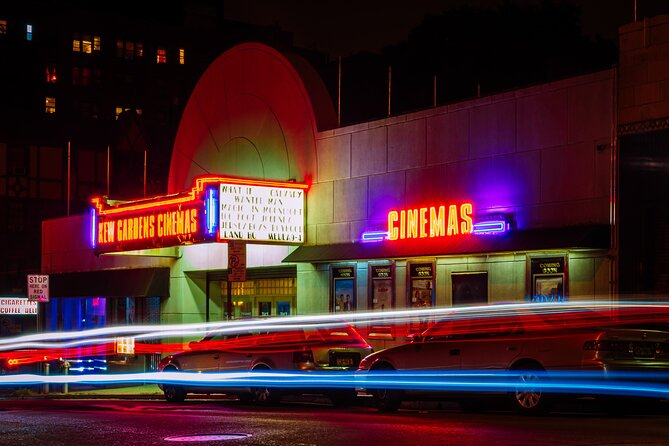
On the way to Coconut Grove, you pass Vizcaya Museum and Gardens, a landmark known for its European-style look overlooking Biscayne Bay. It’s easy to understand why people love it. The setting feels serene, especially next to Miami’s flashier image.
But the tour also points out the risk that came with that opulence. Vizcaya was described as a popular target, and in 1971, three New York residents reportedly raided and stole about $1.5 million in art, jewelry, and collectibles.
Here’s the part that makes this stop more than a pretty photo moment. The robbers were reportedly caught in New York City three days later, yet only a small fraction of the stolen items were recovered and brought back to Vizcaya.
That detail connects well with the theme of the tour. Even when you’re looking at beauty and refinement, Miami’s high-value environment made it vulnerable—at the same time the city was dealing with bigger, harder-to-track kinds of money.
Coconut Grove and the peacocks: the neighborhood behind the headlines
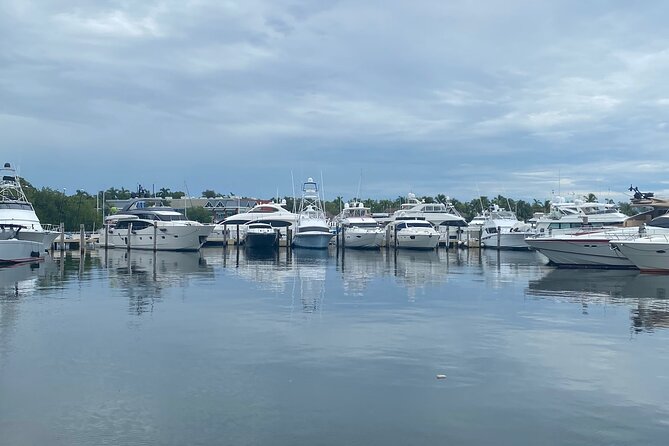
Once you arrive in Coconut Grove—often called The Grove—the tour leans into atmosphere. This area is described as one of South Florida’s hippest, most energetic corners, with marinas nearby and elegant hotels close together.
You’ll drive through a luxury district context, with references to houses and the kind of environment that made it easy for high-profile activity to exist in plain view. And yes, you may also see peacocks, since they’re known to roam freely here.
That peacock detail sounds playful, but it supports the bigger point of the tour. Coconut Grove has a lived-in, almost theatrical quality. It’s the kind of setting where glamour can look normal, even when the stories behind it are not.
Marinas as drug routes: speed, patrol limits, and old tactics
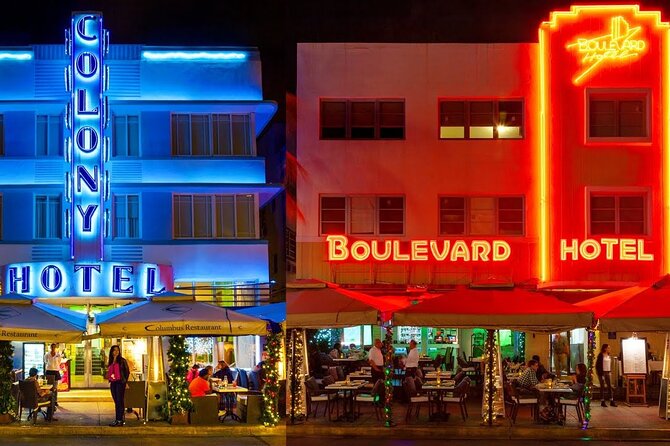
One of the most interesting segments is the marina stop. You’ll look at marinas around Coconut Grove and hear about distribution channels used by drug kingpins in the 1980s.
The tour traces the idea back through earlier illegal boat-running methods, including the Prohibition era. The recurring theme is that drug runners used boats in ways designed to outmaneuver law enforcement.
The explanation ties it to speed and patrol limitations. Drug dealers allegedly used faster boats to escape U.S. Coast Guard and DEA agents, and the patrol boats of the time were described as unable to catch them because of higher speeds.
This is where the tour feels grounded. It’s one thing to say drugs moved by sea. It’s another to hear the logic: transportation technology, enforcement reach, and geography all interacted.
Also, marinas are still part of Miami life today, which makes the comparison hit harder. You can stand in a scenic waterfront setting and understand how the same waters were once used for escape routes.
Miami City Hall’s flying-boat past: Pan Am to local power
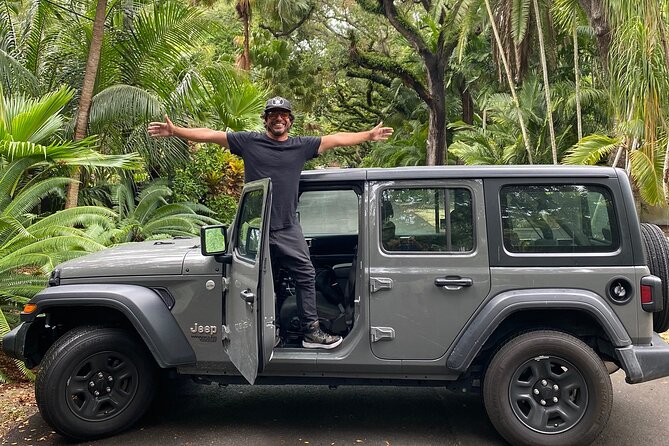
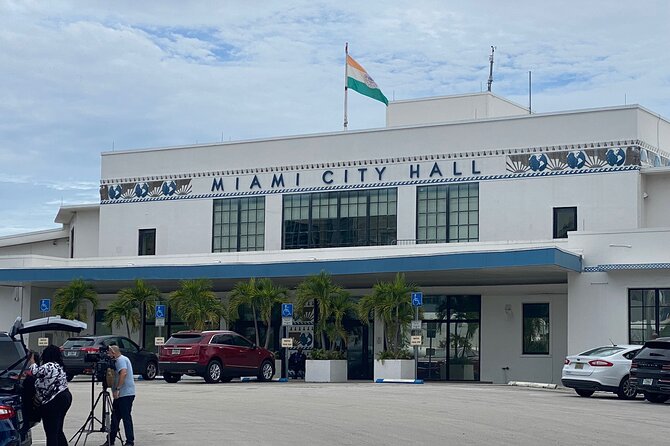
On the way to the Mutiny area, you pass Miami City Hall and hear how the building’s purpose changed over time. The current City Hall was built in 1934 by Pan American Airlines for a worldwide flying-boat terminal.
Then the story shifts from aviation to public ownership. The air terminal was sold to the city in 1946. After a stint as Jackie Heller’s Dinner Key Terrace restaurant, the building became City Hall in 1954.
Why include this stop in a drug-war themed tour? Because it reinforces the idea that Miami’s role as a gateway has long mattered. If the city is full of links between travel, shipping, money, and movement, the early 1980s couldn’t help but plug into that existing infrastructure.
The Mutiny Hotel at Sailboat Bay: where money, power, and celebrities crossed paths
The final stop is the one most people come for: the Mutiny Hotel at Sailboat Bay in Coconut Grove. The tour frames it as an icon tied directly to the drug-war era, described as a hotspot for drug dealers and celebrities.
You’ll hear it was called a mecca for 1980s cocaine kingpins. It’s also described as being perennially overbooked, with armored trucks reportedly leaving with sacks of cash profits.
That image is intentionally blunt. It’s meant to show the scale of money moving out of a single place, day after day.
The tour also adds a celebrity-and-power angle. The story includes celebs, crooked pols, spies, informants, and cops—good and bad—all allegedly in the mix. And it points out that Miami was branded as a murder-and-drug capital during the same period.
Then there’s the Dom Pérignon detail, which is so specific it sticks. The Mutiny was described as selling more bottles of Dom Pérignon than any other establishment on the planet. In a tour like this, that’s not trivia for trivia’s sake. It shows how normal luxury could exist next to extraordinary criminal wealth.
Even if you don’t want the darker parts of history, this stop helps you understand how places become symbols. Hotels, marinas, and office buildings weren’t just backdrops; they were part of the system.
What you’ll actually experience: music, water, and no-bathroom reality
This is an hour-long, small-group ride in a convertible Jeep, with a driver guide and bottled water included. You can also play your own music through Bluetooth.
That Bluetooth option matters more than it sounds. It lets you set the mood—though I’d recommend keeping volume reasonable so you can hear the guide’s stories. When you’re learning about a specific historical period, the audio clarity helps.
Because the tour is described as a good-weather experience, plan for timing around Miami’s conditions. If weather forces a change, you’ll be offered a different date or a full refund.
And again: no bathroom is included. If you’re someone who easily loses track of time, handle that before you meet. A short tour can still feel long if you’re uncomfortable.
Should you book this Miami Cocaine Capital in the 80’s tour?
I think this is a good booking if you want Miami history with a clear focus and real place-to-place connections. It’s also ideal if you like learning how money and infrastructure shape a city, not just dates and headlines.
Book it if you’ll enjoy a convertible Jeep ride through Coconut Grove and want the Mutiny Hotel era explained in specific, memorable terms. It’s also a strong choice for small groups of up to four, since the price is set per group rather than per person.
Skip it if you’re uncomfortable with crime-related storytelling or you strongly prefer tours with on-board amenities like bathrooms. And if weather is unpredictable during your dates, treat this as something you’ll want to schedule with flexibility.
If you’re choosing between a vague Miami overview and a targeted 1980s drug-war snapshot, this one leans clear and practical. You’ll come away with a better sense of how the city’s glamour, money, and movement were connected.
FAQ
How long is the Miami Cocaine Capital in the 80’s History tour?
It runs about 1 hour.
How much does the tour cost?
It costs $75.00 per group, with a maximum of 4 people per group.
Is the tour private or shared?
It’s private. Only your group participates.
What’s included in the tour?
Included items are a driver guide, a convertible Jeep, bottled water, and Bluetooth so you can play your own music. It also notes a small group format (maximum 4 guests per car).
Is there a bathroom available during the tour?
No. A bathroom is not included.
Where do we meet, and where does the tour end?
You start at David T. Kennedy Park, 2400 S Bayshore Dr, Miami, FL 33133, and the tour ends back at the same meeting point.
Do I need to bring a printed ticket?
No. It uses a mobile ticket.
What if the weather is bad?
The experience requires good weather. If it’s canceled due to poor weather, you’ll be offered a different date or a full refund.
What is the cancellation policy?
You can cancel for a full refund up to 24 hours before the start time. If you cancel less than 24 hours before, the amount paid is not refunded.
More Historical Tours in Miami
- Award-winning Art Deco & History Walking Tour in Miami Beach
★ 5.0 · 138 reviews - Miami Beach Art Deco & History Bike Tour with Design Enthusiast
★ 5.0 · 135 reviews - Miami Small Group Boat Tour: History, Wildlife, and Stiltsville
★ 5.0 · 65 reviews - Miami Beach Food & History Tour In Sobe
★ 5.0 · 49 reviews - Award-winning Art Deco & History Walking Tour
★ 5.0 · 28 reviews
More Miami Trips We Have Reviewed
- Little Havana Food and Walking Tour in Miami
★ 5.0 · 8,882 reviews - Miami: Everglades National Park Airboat Tour & Wildlife Show
★ 4.5 · 7,296 reviews - Miami: Hop-on Hop-off Open-top Bus Tour and Optional Cruise
★ 4.1 · 3,077 reviews - 2 hrs Miami Private Boat Tour with Cooler, Ice, Bluetooth Stereo
★ 5.0 · 2,968 reviews - City Half Day Tour of Miami by Bus with Sightseeing Cruise
★ 3.5 · 2,747 reviews
More Tour Reviews in Miami
- Little Havana Food and Walking Tour in Miami
★ 5.0 · 8,882 reviews - From Miami: Everglades Airboat, Wildlife Show & Bus Transfer
★ 4.2 · 8,622 reviews - Miami: Biscayne Bay Millionaire’s Homes Sightseeing Cruise
★ 4.5 · 7,348 reviews - Miami: Everglades National Park Airboat Tour & Wildlife Show
★ 4.5 · 7,296 reviews - Miami: Hop-on Hop-off Open-top Bus Tour and Optional Cruise
★ 4.1 · 3,077 reviews
Just Added: New Miami Reviews

Historical Tours, compared.
 ★ 5.0Award-winning Art Deco & History Walking Tour in Miami BeachFrom $49138 reviews
 ★ 5.0Miami Beach Art Deco & History Bike Tour with Design EnthusiastFrom $79135 reviews
 ★ 5.0Miami Small Group Boat Tour: History, Wildlife, and StiltsvilleFrom $18665 reviews
 ★ 5.0Miami Beach Food & History Tour In SobeFrom $7549 reviews
 ★ 5.0Award-winning Art Deco & History Walking TourFrom $4928 reviews
 ★ 5.0South Beach Food Tour- Culinary & Art Deco & HistoryFrom $6722 reviews
 ★ 4.5Little Havana Walking Tour for History BuffsFrom $3921 reviews
 ★ 4.5La Perle de Miami: Little Haiti History, Culture, TourFrom $5020 reviews
Browse the lists this tour appears in