
REVIEW · AUDIO TOURS
Big Cypress National Preserve Self Guided Driving Audio Tour
One drive. A whole swamp education.
This self-guided Big Cypress National Preserve audio tour turns a long stretch of roads into an easy, story-led loop, with location-triggered narration so you’re not juggling maps. I like how it mixes Native history, wildlife boardwalks, and swamp trail moments into a route you can control. Two things I really appreciate are the hands-free audio that plays as you move between stops, and the offline maps that keep working once you’ve downloaded the tour.
The only real drawback to plan around is physical comfort. Some stops are short walks, but Gator Hook Trail is a longer hike through ankle-deep to knee-deep water, and you’ll want footwear that can handle wet ground.
In This Review
- Key takeaways before you drive
- How the Big Cypress audio tour works (and why it feels low-stress)
- Car audio and walking audio
- Price and value: $16.99 for up to four people
- Starting point: 29701 Southwest 8th Street and that Buffalo Tiger landmark
- Stop 1: US Highway 41 and the Indigenous roots behind the region
- Stop 2: Miccosukee Indian Village for crafts and a museum
- Stop 3: Tree Snail Hammock Trail, the short walk with a real payoff
- Stops 4 and 8: Two boardwalk breaks for wildlife spotting
- Stop 4: H.P. Williams Roadside Park
- Stop 8: Kirby Storter Roadside Park
- Stop 5 and 6: Loop Road engineering stories and the Jetport plot
- Stop 5: Loop Road and the 1915 swamp-highway idea
- Stop 6: County Road 94 and the Big Cypress Jetport that never happened
- Stop 7: Gator Hook Trail, the hike with water up to your knees
- Stop 9: Big Cypress National Preserve and the orientation moment
- Stop 10: The Ochopee Post Office for a small, quirky souvenir
- Stop 11: Nathaniel P. Reed Visitor Center, plus Sam Vinikoff paintings
- Stop 12: Big Cypress Bend Boardwalk for old-growth cypress vibes
- What to pack and how to avoid common problems
- Is it right for you? (Quick booking decision)
- FAQ
- How much does the Big Cypress National Preserve self-guided audio tour cost?
- How long does the tour take?
- Do I need cell service during the tour?
- What language is the tour available in?
- Where do I start and how do I begin?
- What devices are recommended for the best experience?
- What’s included with the tour?
Key takeaways before you drive
- Offline audio and maps: download once on strong signal, then run the tour without cellular or wifi
- Great value per car: $16.99 for up to 4 people, with lifetime access and no expiry
- Hands-free, location-triggered narration: audio cues run as you follow the route
- Wildlife-focused boardwalks: H.P. Williams Roadside Park and Kirby Storter are designed for easy viewing
- A real swamp hike option: Gator Hook Trail can be muddy and wet for much of the route
- Local stopping points beyond nature: the Ochopee Post Office and the Nathaniel P. Reed Visitor Center add context
Easier with a local at the front, more options
- Miami: Open-top Bus Sightseeing Night Tour with Live Guide
★ 4.0 · 1,902 reviews - Best of Miami: Private Top-Rated Boat Charter & Guided Experience
★ 5.0 · 1,462 reviews - 60 min. Everglades Airboat ride & pick-up ,small group +pro guide
★ 4.5 · 1,252 reviews - Miami: South Beach Private 35-Minute Guided Flight Tour
★ 4.8 · 591 reviews
How the Big Cypress audio tour works (and why it feels low-stress)
You’re buying a self-guided experience, not a group ride. That matters in Big Cypress because you’ll want to pause when something catches your eye: a boardwalk with movement in the water, a cypress grove that looks picture-perfect, or a short trail you suddenly decide is worth it.
After you book, you get an email and text with setup instructions and a password. You’ll use Action’s Tour Guide App (the separate app) and enter that password. One key rule: download the tour while you’re on strong wifi/cellular. After that, the audio and offline maps do their job even when service disappears. The tour also lets you start anytime and pause anywhere, so you can build in snack breaks, photo stops, or extra time at one location without feeling like you’re holding up anyone else.
Car audio and walking audio
If you want this to be truly hands-free, plan your audio setup before you step out. The app supports connecting your phone to your car stereo via Bluetooth, USB, or AUX. It’s also compatible with Apple CarPlay, with navigation features listed as coming soon, and Android Auto mentioned as on the way. If you hop out for short trails, you might prefer headphones for clarity in windier spots.
Price and value: $16.99 for up to four people
This is priced at $16.99 per group, up to 4 people. That’s a big deal because most guided tours charge per person, and Big Cypress is a place where one car can comfortably do the route. If you’re traveling as a small group or family, you’re basically paying for one ticket to access the route’s stories, not paying a premium for each headset.
The other value lever is time. You get new, lifetime access with no expiry, so you can reuse it on another trip. That’s especially helpful if you want to return later in the day for different light, or if you get rained out one afternoon and want to try again.
Starting point: 29701 Southwest 8th Street and that Buffalo Tiger landmark
Your tour begins back at 29701 Southwest 8th Street. The directions are straightforward: you should see Buffalo Tiger’s boat shop on your right. If you’re not at the right spot, take a moment to reposition before you start playback.
This matters because the tour uses audio cues tied to your location. Once you launch the correct tour version in the app, the first story starts automatically when you reach the right point. Then the audio continues between stops without you needing to keep tapping through a menu.
Before you lock in this Miami trip, weigh these up too:


Stop 1: US Highway 41 and the Indigenous roots behind the region
The stories begin on US Highway 41 with the idea that this part of South Florida was home to multiple tribes over time. You’ll hear how the Miccosukee were not the only group to call the region home, and you’ll get names like the Calusa and the Seminole explained through a wider Creek-to-Seminole connection.
Why this stop is worth it: you’re learning the human timeline of the area before you ever step into cypress shade or see wildlife from a boardwalk. Even if you only spend a few minutes, it changes how you interpret everything you’ll pass afterward.
What to consider: this is mostly a driving-and-listening moment. If you love taking long stretch-photo stops, don’t count on US 41 being a big “park and explore” experience.
Stop 2: Miccosukee Indian Village for crafts and a museum
Next up is Miccosukee Indian Village, run by members of the Miccosukee tribe. This is where the tour starts to shift from background history into living culture you can browse at your own pace. The village offers Native arts and crafts and includes a museum about their history.
You’ll also hear about a difficult chapter in the 1800s: during the Indian Wars, many Miccosukee fled into the Everglades to avoid capture. That context helps you understand why the Everglades and Big Cypress matter far beyond scenery.
Value move: if you’re short on time, skim first for what you want most (museum vs. crafts), then circle back if you find something you actually want to read closely.
Stop 3: Tree Snail Hammock Trail, the short walk with a real payoff
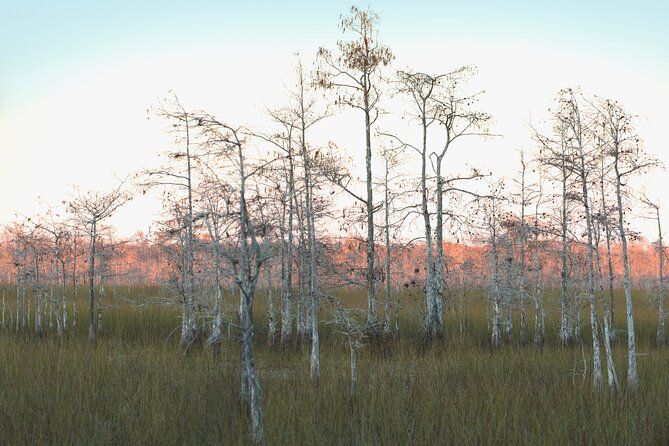
Then you get a tiny trail that punches above its weight: Tree Snail Hammock Trail is a quarter-mile loop through a hardwood forest. It can be done in about five minutes if you just want legs and fresh air, but the audio encourages lingering because this is a place to spot the elusive tree snail.
This stop is perfect for people who don’t want a long hike. It’s also a good reminder to bring patience. If the snail doesn’t show itself on your schedule, you still get the forest feel and a quick reset between longer boardwalks.
Practical tip: bring bug protection and wear shoes you don’t mind getting a bit damp.
Stops 4 and 8: Two boardwalk breaks for wildlife spotting
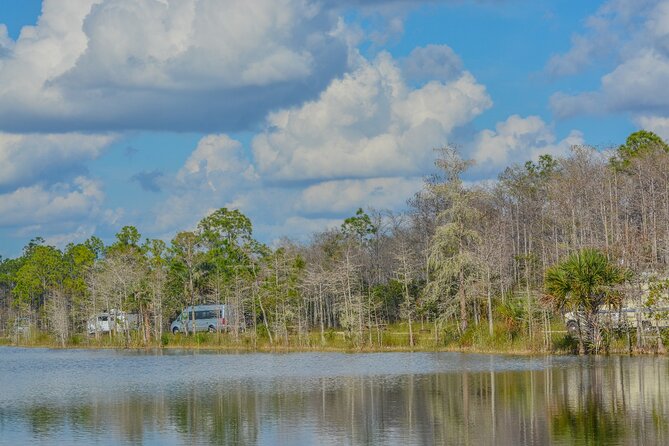
Big Cypress rewards slow stops, and the audio gives you two of the best “easy walking, good viewing” setups.
Stop 4: H.P. Williams Roadside Park
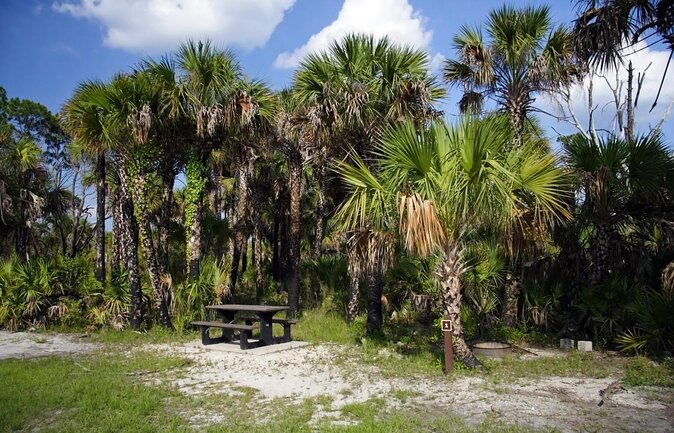
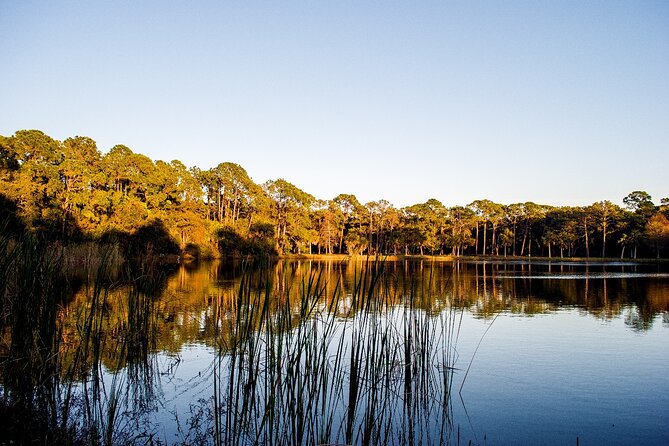
At H.P. Williams Roadside Park, you’ll find a boardwalk along a waterway. The story focuses on wildlife: alligators, turtles, and the occasional snake, plus birds like herons and egrets wading in the water and hawks perched above.
What I like about boardwalk stops here: they help you stay on stable ground. You can look, listen, and reposition without trampling through brush.
What to expect: you’re not guaranteed animal sightings. This kind of spotting is more about creating the conditions to see them than forcing results.
Stop 8: Kirby Storter Roadside Park
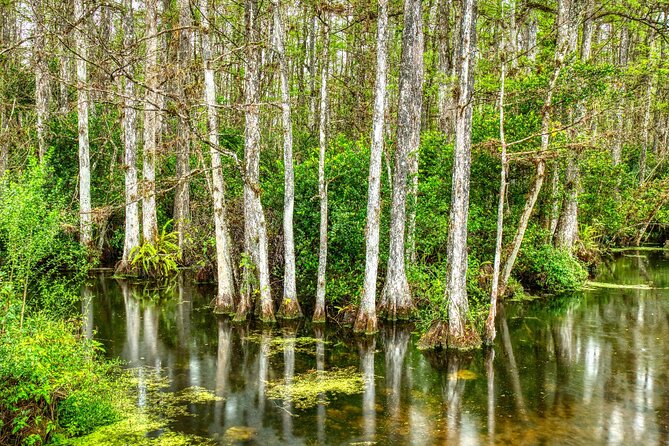
Later you’ll reach Kirby Storter Roadside Park, one of the tour’s standout scenic moments. The main draw is a mile-long boardwalk through lush hardwood and cypress, with shade that makes the walk feel easier than you might expect.
If you want that classic Big Cypress “green tunnel” feeling, this is where it shows up. It’s long enough to feel like an excursion, but it’s still a boardwalk, so you’re not dealing with swamp footing the way you do on water hikes.
Stop 5 and 6: Loop Road engineering stories and the Jetport plot
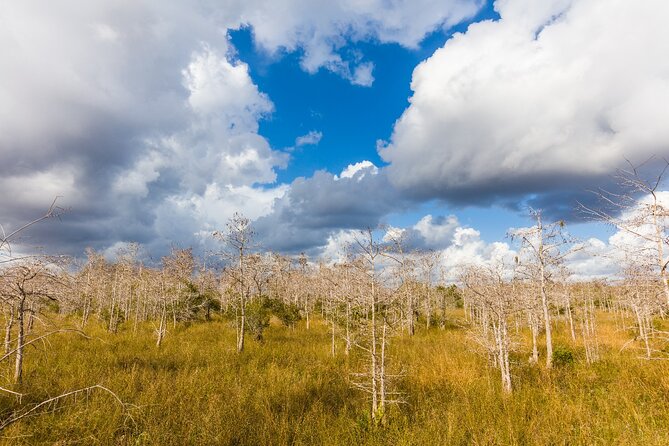
This driving portion is where the tour shifts from nature observation to human impact and infrastructure.
Stop 5: Loop Road and the 1915 swamp-highway idea
Loop Road is described as easy to drive but tough to build. Back in 1915, Miami businessman James Jaudon had an idea for a highway cutting across swamp to move goods more easily.
This section is useful because it helps you connect the dots between today’s preserve and the pressure to develop the land. You’ll be moving through the landscape while hearing how people tried to conquer it.
Stop 6: County Road 94 and the Big Cypress Jetport that never happened
County Road 94 adds the big “why Big Cypress became protected” storyline. It starts with the Everglades becoming a national park in the 1940s. The federal government couldn’t purchase certain private land, so it wasn’t included. That left it vulnerable to development.
Then the 1960s plan shows up: building a Big Cypress Jetport, described as something that would have been the largest airport in the world. Hearing that while you drive through the area makes the preserve’s existence feel less accidental.
Stop 7: Gator Hook Trail, the hike with water up to your knees
If you only do one “stretch legs” stop, this is the one that feels most like Big Cypress rather than just looking at it.
Gator Hook Trail is listed as a moderately challenging 5-mile round trip. The route begins on dry land, but it doesn’t stay that way. You’ll step into ankle-deep water, then wade into deeper water that can reach knees or, for shorter travelers, hips.
This is the stop that you plan for, not the stop you casually fit in. If you pick this trail, give yourself enough time and don’t assume you’ll move fast.
What I’d recommend based on the trail description alone:
- Wear footwear you can get wet and that gives traction
- Expect the ground to change as you go
- Bring a change of socks if you have one
One past buyer specifically suggested that prep tips like appropriate shoes for wet areas should be clearer. I agree with that logic. The audio can tell you what to expect, but your comfort depends on your gear.
Stop 9: Big Cypress National Preserve and the orientation moment
Once you reach the Big Cypress National Preserve segment, your focus shifts to getting oriented. The instructions point you to that starting address again and cue you to the landmark of Buffalo Tiger’s boat shop so you’re grounded in the geography.
Why this helps: Big Cypress can feel “samey” if you’re not mentally mapping it. The tour keeps you from getting lost by tying stories to your actual driving route.
Stop 10: The Ochopee Post Office for a small, quirky souvenir
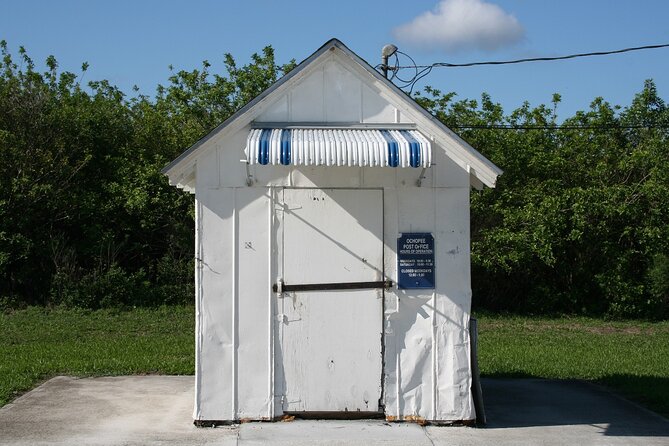
At 38000 Tamiami Trl E, look for a little white shack: the Ochopee Post Office. The tour calls it the smallest post office in North America. If you want something truly local, you can stop in and get something postmarked, which can become a souvenir you can’t fake from a gift shop.
This is also a nice break from just nature. It’s a reminder that these roads connect communities, not only ecosystems.
Stop 11: Nathaniel P. Reed Visitor Center, plus Sam Vinikoff paintings
The audio tour ends at the Nathaniel P. Reed Visitor Center. You’ll find standard visitor amenities, but the story highlights two details you may miss if you only glance at exhibits.
First, you can see paintings by Everglades artist Sam Vinikoff. Second, the visitor center itself is described as being designed with energy conservation in mind.
If you still have energy after the drive and boardwalks, this is worth the time. It’s the place where the trip feels organized instead of just “a drive with stops.”
Stop 12: Big Cypress Bend Boardwalk for old-growth cypress vibes
The tour also includes Big Cypress Bend Boardwalk, about ten miles from the visitor center. This is a half-mile boardwalk weaving through an old-growth cypress grove.
Even if you already did Kirby Storter earlier, this stop adds variety. The old-growth setting gives you a different feel, and the half-mile distance keeps it in the “worth it” category for most people.
What to pack and how to avoid common problems
This route is self-guided, which means you’re responsible for comfort. The audio helps, but your body and your shoes still do the heavy lifting.
Here’s what I’d bring:
- Waterproof or water-friendly footwear for the water hike possibility
- Bug spray for forest and boardwalk areas
- A light layer if mornings feel cool
- If you plan to connect to car audio, check your phone charge before you start
One more practical note: the tour involves real driving on roads around the preserve. That can mean bumps and uneven pavement. Drive like you’re going to enjoy the stops, not like you’re trying to beat a clock.
Is it right for you? (Quick booking decision)
Book this tour if you want:
- A self-paced way to see Big Cypress without a group schedule
- Offline audio that keeps you moving between key stops
- A mix of nature (boardwalks and forest trails) and context (Native history, preserve origin, and local stopping points)
- Value for a small group car, thanks to the $16.99 per-group pricing and lifetime access
Skip it or think twice if:
- You’re not comfortable with water-wading conditions described for Gator Hook Trail
- You don’t want to manage your own phone setup and downloading the tour while you have strong signal
FAQ
How much does the Big Cypress National Preserve self-guided audio tour cost?
It costs $16.99 per group, for up to 4 people.
How long does the tour take?
Plan on about 2 to 3 hours for the essentials. One description also notes the full route as 48+ miles with a 3 to 5 hour range depending on how you experience it.
Do I need cell service during the tour?
No. The app includes offline maps, so it works without cellular or wifi after you’ve downloaded it. You do need strong wifi/cellular to download the tour in advance.
What language is the tour available in?
The tour is offered in English.
Where do I start and how do I begin?
You start at 29701 Southwest 8th Street in Miami. There’s no one meeting you; once you’re onsite, open the Action’s Tour Guide app and launch the correct tour version. The audio starts automatically when you’re at the first story point.
What devices are recommended for the best experience?
The guide recommends an iPhone (iOS 15 or later), Android (version 9 or later), or an iPad/tablet with GPS and cellular connectivity for navigation.
What’s included with the tour?
You get location-triggered audio stories, offline maps, and an easy-to-use app for starting, pausing, and resuming at your own pace. No attraction passes or reservation entries are included.
If you tell me when you’re going and what kind of walking comfort you have (dry feet only, or willing to wade), I can suggest how to prioritize the stops so your drive feels smooth.
Hand the Map to a Local
- Miami: Open-top Bus Sightseeing Night Tour with Live Guide
★ 4.0 · 1,902 reviews - Best of Miami: Private Top-Rated Boat Charter & Guided Experience
★ 5.0 · 1,462 reviews - 60 min. Everglades Airboat ride & pick-up ,small group +pro guide
★ 4.5 · 1,252 reviews - Miami: South Beach Private 35-Minute Guided Flight Tour
★ 4.8 · 591 reviews - Miami: Open-top Bus Sightseeing Night Tour with Live Guide
★ 4.3 · 528 reviews
More Miami Trips We Have Reviewed
- Little Havana Food and Walking Tour in Miami
★ 5.0 · 8,882 reviews - Miami: Everglades National Park Airboat Tour & Wildlife Show
★ 4.5 · 7,296 reviews - Miami: Hop-on Hop-off Open-top Bus Tour and Optional Cruise
★ 4.1 · 3,077 reviews - 2 hrs Miami Private Boat Tour with Cooler, Ice, Bluetooth Stereo
★ 5.0 · 2,968 reviews - City Half Day Tour of Miami by Bus with Sightseeing Cruise
★ 3.5 · 2,747 reviews
More Tour Reviews in Miami
- Little Havana Food and Walking Tour in Miami
★ 5.0 · 8,882 reviews - From Miami: Everglades Airboat, Wildlife Show & Bus Transfer
★ 4.2 · 8,622 reviews - Miami: Biscayne Bay Millionaire’s Homes Sightseeing Cruise
★ 4.5 · 7,348 reviews - Miami: Everglades National Park Airboat Tour & Wildlife Show
★ 4.5 · 7,296 reviews - Miami: Hop-on Hop-off Open-top Bus Tour and Optional Cruise
★ 4.1 · 3,077 reviews
Just Added: New Miami Reviews




Audio Tours, compared.
 ★ 4.5Self-Guided Audio Tour in Florida KeysFrom $1684 reviews
 ★ 4.5Everglades National Park: Self Guided Driving Audio TourFrom $1658 reviews
 ★ 3.0Self-Guided Audio Tour – Little HavanaFrom $109 reviews
 ★ 3.0Self-Guided Audio Tour – Miami Art DecoFrom $117 reviews
 ★ 5.0Miami Beach Smartphone Audio Walking TourFrom $106 reviews
 ★ 4.5Miami Beaches Self-Guided Driving Audio TourFrom $143 reviews
Browse the lists this tour appears in