
REVIEW · AUDIO TOURS
Miami Beach Smartphone Audio Walking Tour
South Beach has a story you can hear. This smartphone audio walking tour strings together Miami Beach’s nature, design, and Art Deco landmarks with commentary that plays at each stop. I love that it feels like a local walk—without the pressure of a group schedule.
Two things I especially like: the live GPS map that keeps you oriented, and the flexibility to start and pause whenever your day allows. One thing to consider: you’ll need a working smartphone (and either rely on the phone speaker or bring headphones, since headphones aren’t included).
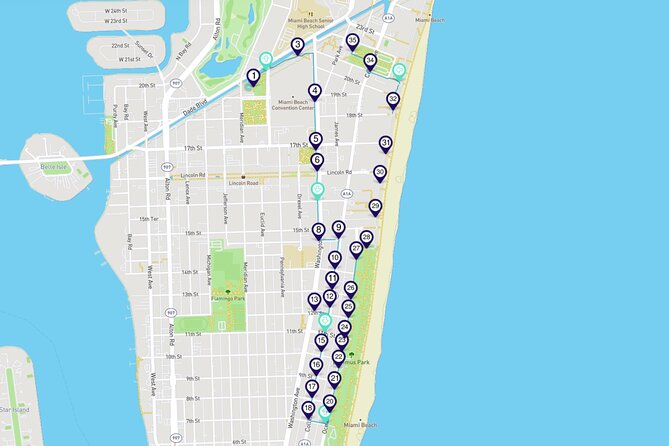
Plan on about 2 to 3 hours, walking at a moderate pace. You start at the Miami Beach Botanical Garden and end back at the same meeting spot, so the whole experience is easy to plug into a day of beach time, museums, and people-watching.
In This Review
- Key highlights worth knowing
- Price and time: value for a self-guided day
- Getting started at Miami Beach Botanical Garden (and why that’s a smart move)
- How the smartphone audio experience actually works
- Walking the route: what you’ll hear at each major stop
- Miami Beach Garden-Center: a 4-acre jungle start
- Holocaust memorial context: a site shaped by survivors
- Humanoids sculpture walk: aluminum public art in green space
- A venue opened in 1958, renovated 2015–2018
- A lush contemporary park: music, design, and culture
- The mangrove clue: from coastal shrubs to a new shoreline story
- Espanola Way renaissance: where people gather
- Entertainment venue roots back to the 1930s
- Henry Hohauser’s 1939 Streamline Modern gem: the Webster
- Historic hotels reinvented in the 1990s: recording-artist era
- 2005 erotic art museum founded by Naomi Wilzig
- The Tony Hotel, formerly Tiffany: restorations and awards
- Ocean Drive neon: the bright blue beacon
- Breakwater Hotel and the neighborhood story around it
- Nonprofit preservation: how Miami Beach protects its identity
- Art Deco icon building: you’ll feel the style instantly
- Casa Casuarina (Versace Mansion): fashion meets architecture
- A legendary beachfront Art Deco hotel
- The Carlyle: film and TV backdrop for 75 years
- Rounded-line Art Deco: like a Studebaker fender
- Cavalier: masterpiece of the Art Deco movement
- McAlpin: near-perfect embodiment of Art Deco
- The modern resort crossover, then the Delano’s military-start story
- Landscaped paths and works of art: The Bass finale
- Should you book? Quick fit check
- FAQ
- How long is the Miami Beach Smartphone Audio Walking Tour?
- Where does the tour start and end?
- Does the tour require mobile data or a cell signal?
- Is this a live guided tour?
- Do I need headphones?
- Do I need a smartphone or tablet?
Key highlights worth knowing
- Offline audio setup: download before you go on Wi‑Fi, then use no signal/data during the tour
- Auto-play narration: commentary kicks in automatically at each point of interest
- Easy pacing: no time limits, flexible dates, and you can take as long as you like
- Orientation help: live GPS map shows your route and where you are
- Big mix of themes: tropical gardens, Holocaust history, public art, and Art Deco hotels
- Small-batch cap: maximum group size is listed as 50 travelers
Miami at street level, more walks
- Little Havana Food and Walking Tour in Miami
★ 5.0 · 8,882 reviews - The Official Art Deco Walking Tour by The Miami Design Preservation League
★ 5.0 · 1,580 reviews - South Beach Cultural Food and Walking Tour
★ 5.0 · 1,284 reviews - Miami: Little Havana Food Walking Tour with Tastings
★ 4.9 · 1,181 reviews
Price and time: value for a self-guided day
At $10.99 per person for a 2 to 3 hour walking experience, this is priced like an affordable museum-ticket alternative. The big value isn’t just the audio—it’s that you’re not locked into a single start time or pace. If you like to linger at details (or stop for a snack), this format fits.
The tour also includes a couple of practical perks that matter in South Beach. You get a mobile ticket, and you download the content ahead of time on Wi‑Fi so you can walk without burning data or relying on spotty cell service. That means fewer headaches, more time spent outdoors.
One more practical detail: it’s offered in English and runs with customer service by phone and email if something doesn’t behave. That’s not a guarantee of perfection, but it’s a sign the provider expects technology to be part of the experience—which it is.
Getting started at Miami Beach Botanical Garden (and why that’s a smart move)
Your tour begins at Miami Beach Botanical Garden, 2000 Convention Ctr Dr, Miami Beach, FL 33139. The meeting point is also set up so the activity can be completed with plenty of daytime flexibility (opening hours are listed as 12:00 AM to 11:30 PM, Monday through Sunday).
Starting here makes sense because you’re not only heading into the Art Deco zone later—you’re first getting a nature-and-culture foundation. That early shift helps the rest of the walk land harder. You’ll move from tropical plants and design-thinking to memorials and architecture without it feeling like you jumped straight into a “photo-stop sprint.”
Before you go, I’d do one small thing: charge your phone fully. Since the audio plays either from your device or via optional headphones, low battery becomes your #1 enemy on any app-based walk.
How the smartphone audio experience actually works
This is a self-guided audio tour with guide commentary that plays automatically at each point of interest. A live GPS map shows your route and your location as you walk, so you’re not guessing at corners or second-guessing the next stop.
Included items worth highlighting:
- Download on Wi‑Fi before (no signal required / no data used during the tour)
- Live GPS map to track your progress
- Automatic audio at each point of interest
- No time constraints: take as long as you want
Not included:
- Headphones (optional audio will play from your device speaker too)
- A smartphone/tablet (you provide it)
- Attraction tickets (none of the stops require pre-purchased tickets as part of the tour)
Also, the tour is capped at 50 travelers. Since this is self-guided, that cap mostly hints that the route and tech are planned to work smoothly without crowd-stacking.
Walking the route: what you’ll hear at each major stop
The best way to enjoy this kind of tour is to treat it like a playlist with stops—not like a checklist. Some parts will be quick (you’ll walk and listen while you’re moving). Other parts are where you should slow down and let the architecture and public art sink in.
Before you lock in this Miami trip, weigh these up too:




Miami Beach Garden-Center: a 4-acre jungle start
You begin with a story about how the City of Miami Beach created a Garden-Center to grow tropical fruits. You’re told to imagine a 4-acre sprawling jungle—and it’s an important first clue to the whole tour. Miami Beach isn’t just buildings and beaches. It’s engineered nature.
If you like learning how a place was shaped by human decisions, this opening lands well. It sets up the later talk about mangroves and coastal ecosystems too.
Holocaust memorial context: a site shaped by survivors
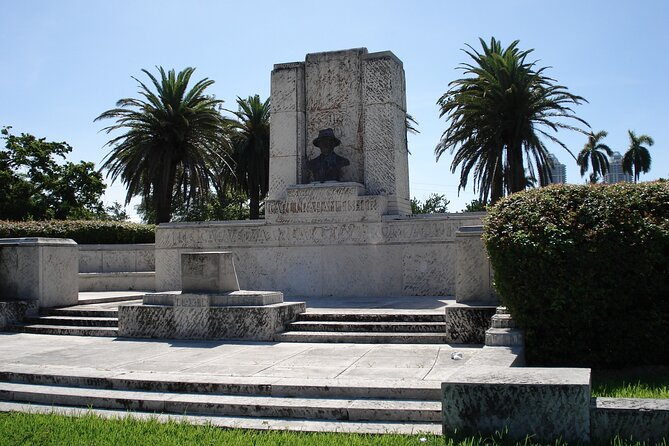
Next comes a memorial conceived by a committee of Holocaust survivors in 1984. The site was previously home to Holocaust survivors, so the background gives the space weight right away.
Even if you’re familiar with the subject, the value here is how the tour frames why this kind of memorial matters beyond a single visit. Listen, then pause long enough to look around you—because the point isn’t speed.
Humanoids sculpture walk: aluminum public art in green space
Then you’ll encounter Humanoids, described as aluminum sculptures across a 2.8-acre green-space. This is where the tour’s design angle shows up. You’re not just reading plaques—you’re experiencing a public-art environment that’s meant to be noticed from different angles.
Practical tip: bring your phone close for photos only when you’re done listening. Auto-play audio can make you miss details if you keep interrupting it.
A venue opened in 1958, renovated 2015–2018
The tour moves to a venue originally opened in 1958, later renovated from 2015–2018. The description teases that the renovations were “large,” and this is the tour nudging you to think about what major investments mean in a city like Miami Beach.
As you walk, look at how the space is used. Renovations aren’t just about money spent—they’re about shifting how people gather, listen, and move through a cultural area.
A lush contemporary park: music, design, and culture
You’ll hear that the park is now considered a world-class destination that marries music, design, and culture. Even without naming every organization, the concept is clear: Miami Beach invests in spaces where the arts aren’t a side project. They’re a core identity.
If you love design, this is a good moment to slow down and notice how the park “frames” sightlines.
The mangrove clue: from coastal shrubs to a new shoreline story
One of the most interesting pivots is the explanation that this strip of land you’re on once was a forest of mangroves—shrubs that grow in coastal, saline waters. It’s not just a fact; it’s a way to read Miami Beach differently.
When you hear that, you’ll start seeing the city as layered: nature, restoration, architecture, reinvention.
Espanola Way renaissance: where people gather
As you move toward Espanola Way, the tour describes it as experiencing a renaissance—a place for locals and travelers to gather, create, and celebrate among shops and restaurants.
This part is less about a single landmark and more about energy. If you want a break from strictly architectural listening, this is where you can walk a little slower, look at storefronts, and then decide if you want to stop for a drink or snack outside the tour.
Entertainment venue roots back to the 1930s
The tour then points you toward an entertainment venue with a history dating back to the 1930s. You’ll pick up why the area became a stage for Miami Beach’s culture and how buildings in the district grew into roles they still play today.
This is one of those sections where your listening will make the streets feel older than they look.
Henry Hohauser’s 1939 Streamline Modern gem: the Webster
You’ll get a tour lesson on architecture through Henry Hohauser, including a Streamline Modern style art deco gem designed in 1939. That building is identified as the Webster.
You’re also told the Webster is an example of Hohauser’s adherence to the rule of three, with the tour explaining what that means. In plain terms, it’s a design habit of grouping key visual elements in sets of three—often to create balance and rhythm on a facade.
If you look at the building while listening, the rule of three becomes much easier to “see” than just hearing it.
Historic hotels reinvented in the 1990s: recording-artist era
Next, the route describes a historical hotel that, in the 1990s, was transposed into a tropical retreat for some of the world’s renowned recording artists and performers. The tour says you’ll hear who some of them are.
Even if you don’t catch every name, the point is that Miami Beach has repeatedly reinvented itself as a creative magnet—not only for tourists, but for working performers.
2005 erotic art museum founded by Naomi Wilzig
Then you’ll stop at a museum founded in 2005 by American erotic art collector Naomi Wilzig. The tour frames it as one of Miami Beach’s best-kept secrets, and it’s described as an intriguing afternoon stop.
This is a great reminder that “South Beach” isn’t only beachwear and neon. If you’re curious, this is the kind of side trip you’d miss with a standard highlights tour.
The Tony Hotel, formerly Tiffany: restorations and awards
The next architectural stop is described as receiving numerous awards recently for restorations. Today it’s the Tony Hotel, South Beach—but when it opened, it was the Tiffany Hotel.
That kind of “before and after” story is exactly what restoration awards usually mean: somebody decided the building wasn’t done yet. For you as a visitor, it’s also a reminder that the district’s look isn’t only historical; it’s actively maintained.
Ocean Drive neon: the bright blue beacon
You’ll learn about a bright blue neon beacon that has overlooked Ocean Drive for nearly 90 years. This is one of those details you might otherwise ignore, but the story makes it feel like part of the city’s daily theater.
If you’re walking during the evening, this stop gets more satisfying. Neon reads differently once the sky turns dark.
Breakwater Hotel and the neighborhood story around it
Next is the Breakwater Hotel, which the tour flags as something you can’t miss. This is also where you’ll likely feel the density of Art Deco structures. Many of them sit close enough that you’re comparing styles in real time.
Nonprofit preservation: how Miami Beach protects its identity
A nonprofit resource founded in 1976 comes next. The tour explains its goal: assisting in historic preservation and enhancing Miami Beach’s unique architectural and cultural identity.
This stop is small but meaningful. It turns the district from a postcard into a lived project: someone has to keep the look intact, and that effort is often not glamorous.
Art Deco icon building: you’ll feel the style instantly
Then the route hits another Art Deco-designed building described as a Miami Beach icon. You may not need a lecture to recognize the style—rounded forms, strong lines, and a sense of “designed for the eye.”
If you’re into architecture, pause here and compare it with what you saw earlier. The tour’s pattern is clear: learn one concept, then see it repeated across the district.
Casa Casuarina (Versace Mansion): fashion meets architecture
You’ll reach Casa Casuarina, better known as the Versace Mansion, renowned for being owned by Italian fashion designer. This stop is where pop culture meets built form.
Listen for how the tour ties the building into Miami Beach’s identity, not just the name itself. If you’ve seen photos, this is still worth it in person because the surrounding setting matters.
A legendary beachfront Art Deco hotel
The tour then points to a legendary Art Deco gem described as one of the most elegant and sophisticated beachfront hotels in the U.S.A. The goal isn’t only to admire the past—it’s to understand that South Beach’s style was built to attract a certain kind of visitor and crowd.
The Carlyle: film and TV backdrop for 75 years
Next: The Carlyle, framed as a backdrop to numerous films and television shows over its 75 years. When a hotel becomes a recurring set, it stops being just a place to stay. It becomes part of how a city is portrayed.
Rounded-line Art Deco: like a Studebaker fender
The tour then describes a hotel showcasing traditional Art Deco style with rounded lines, compared to the fender of a Studebaker. That kind of comparison is actually helpful. It trains your eye for the “feel” of the design, not just the shapes.
This is a good stop to look for curves and softened corners across different facades.
Cavalier: masterpiece of the Art Deco movement
You’ll hear why the Cavalier is regarded as a masterpiece of the Art Deco movement. If you’re walking with your listening on, you’ll start to understand why certain hotels get labeled as “masterpieces”—it’s about the consistent execution of style, not one single feature.
McAlpin: near-perfect embodiment of Art Deco
Then comes the McAlpin, described as a near-perfect embodiment of Art Deco style. Again, pause and compare the design language with what came before.
A smart move here: stop for 60 seconds. Don’t be in a rush. The tour’s narration works best when your eyes have a little time to match the words.
The modern resort crossover, then the Delano’s military-start story
After the Art Deco stretch, the tour illustrates Miami Beach’s crossover to modern resort architecture during the district’s evolution (the narration cuts off mid-thought in the info you provided, but the theme is clear). Then it reaches Delano.
The Delano is described as built in 1947 by Rob and Rose Schwartz, originally used for military housing—before it became part of the resort story you picture today.
This is a great end-of-architecture lesson: the city didn’t just change styles. It changed purposes.
Landscaped paths and works of art: The Bass finale
As you stroll along landscaped paths, you’ll stumble on works of art. The tour specifically calls out The Bass, including its origin and how it became culturally important to Miami Beach.
This ending ties the whole walk together: nature and gardens at the start, then memorial and design, then the hotel and cultural machine of South Beach—and finally, the art institution that keeps the culture moving.
If you want a clean finish, don’t speed up in this final segment. Let the last narration land, then decide if you want to continue exploring the area after the tour ends back at the meeting point.
Should you book? Quick fit check
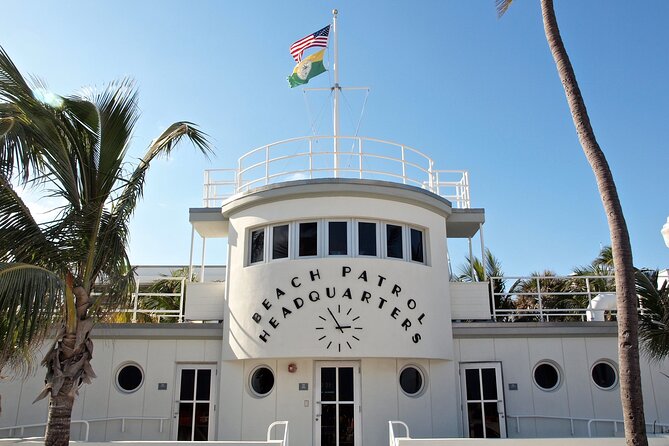
I’d book this tour if you want history + design + architecture in one walk, and you value control over your schedule. The self-paced format, offline audio, and live GPS map make it a good option when you’d rather avoid a rigid group tour.
Skip it (or at least think twice) if:
- your phone battery is unreliable, or
- you don’t like listening while walking, or
- you prefer a human guide who can answer questions on the spot.
For most people who enjoy walking and want a structured way to see Miami Beach, this is a smart, low-cost way to get meaning out of the buildings.
FAQ

How long is the Miami Beach Smartphone Audio Walking Tour?
It’s listed as approximately 2 to 3 hours.
Where does the tour start and end?
It starts at Miami Beach Botanical Garden, 2000 Convention Ctr Dr, Miami Beach, FL 33139 and ends back at the same meeting point.
Does the tour require mobile data or a cell signal?
No. The instructions say to download on Wi‑Fi before, and during the tour no signal is required and no data is used.
Is this a live guided tour?
No. The tour is audio-based, with tour guide commentary automatically plays at each point of interest.
Do I need headphones?
Headphones aren’t included. Optional headphones can be used, but the audio can also play from your device speaker.
Do I need a smartphone or tablet?
Yes—you need your own smartphone or tablet to download and play the audio. A mobile ticket is included, but the device is still required to access the content.
Miami on Foot
- Little Havana Food and Walking Tour in Miami
★ 5.0 · 8,882 reviews - The Official Art Deco Walking Tour by The Miami Design Preservation League
★ 5.0 · 1,580 reviews - South Beach Cultural Food and Walking Tour
★ 5.0 · 1,284 reviews - Miami: Little Havana Food Walking Tour with Tastings
★ 4.9 · 1,181 reviews - Miami South Beach Art Deco Walking Tour
★ 5.0 · 1,039 reviews
More Miami Trips We Have Reviewed
- Little Havana Food and Walking Tour in Miami
★ 5.0 · 8,882 reviews - Miami: Everglades National Park Airboat Tour & Wildlife Show
★ 4.5 · 7,296 reviews - Miami: Hop-on Hop-off Open-top Bus Tour and Optional Cruise
★ 4.1 · 3,077 reviews - 2 hrs Miami Private Boat Tour with Cooler, Ice, Bluetooth Stereo
★ 5.0 · 2,968 reviews - City Half Day Tour of Miami by Bus with Sightseeing Cruise
★ 3.5 · 2,747 reviews
More Tour Reviews in Miami
- Little Havana Food and Walking Tour in Miami
★ 5.0 · 8,882 reviews - From Miami: Everglades Airboat, Wildlife Show & Bus Transfer
★ 4.2 · 8,622 reviews - Miami: Biscayne Bay Millionaire’s Homes Sightseeing Cruise
★ 4.5 · 7,348 reviews - Miami: Everglades National Park Airboat Tour & Wildlife Show
★ 4.5 · 7,296 reviews - Miami: Hop-on Hop-off Open-top Bus Tour and Optional Cruise
★ 4.1 · 3,077 reviews
Just Added: New Miami Reviews




Audio Tours, compared.
 ★ 4.5Self-Guided Audio Tour in Florida KeysFrom $1684 reviews
 ★ 4.5Everglades National Park: Self Guided Driving Audio TourFrom $1658 reviews
 ★ 3.0Self-Guided Audio Tour – Little HavanaFrom $109 reviews
 ★ 3.0Self-Guided Audio Tour – Miami Art DecoFrom $117 reviews
 ★ 4.0Big Cypress National Preserve Self Guided Driving Audio TourFrom $166 reviews
 ★ 4.5Miami Beaches Self-Guided Driving Audio TourFrom $143 reviews
Browse the lists this tour appears in