
REVIEW · LITTLE HAVANA & CUBAN FOOD TOURS
Little Havana Walking Tour – Food Tastings, Traditions & Music
Quick Havana hits in just 2.5 hours. This walking tour strings together Cuban crafts, food tastings, and live music so you get a real sense of Little Havana’s culture without spending a whole day wandering. I especially like how each stop comes with a clear story, not just a photo op.
My two favorite parts are the chance to see guayabera details up close and (separate from that) the cigar-rolling demonstration at the cigar factory. It’s the kind of “how it’s made” viewing that turns into a souvenir you actually understand.
One thing to consider: the tour depends on good weather and may be changed if operational minimums aren’t met. If your Miami schedule is tight, keep a little flexibility.
In This Review
- Key Things to Know Before You Go
- A 2.5-Hour Little Havana Plan That Actually Makes Sense
- Where You Start, How You’ll Walk, and What the Flow Feels Like
- Stop 1: D’Asís Guayaberas and the Shirt That Means More Than Fashion
- Stop 2: Inside a Little Havana Cigar Factory (Hand-Rolled Process, Plain Talk)
- Stop 3: Domino Park, Where Community Turns Into a Daily Ritual
- Stop 4: The Bay of Pigs Monument and the Weight of 1961
- Stop 5: Party Cake Bakery and the Sweet Side of Cuban Daily Life
- Stop 6: Churromanía for Churros and Dulce de Leche Comfort
- Ball & Chain: Music Club History Plus a Nightlife Sense of Place
- Calle Ocho Walk of Fame: Stars Embedded Underfoot
- Price and Value: What $69.99 Buys You in Real Terms
- Weather, Timing, and How to Plan Your Day
- The Guide Factor: When You Get Someone Like Danny
- Who This Tour Is Best For (And Who Might Want Something Else)
- Should You Book This Little Havana Walking Tour?
- FAQ
- How long is the Little Havana Walking Tour?
- How much does it cost?
- Where does the tour start and end?
- What language is the tour offered in?
- What’s included in the price?
- Are alcoholic drinks included?
- Is the tour dependent on weather?
- How big is the group?
- Is there free cancellation?
- Are service animals allowed?
Key Things to Know Before You Go
- D’Asís Guayaberas: learn the shirt’s cultural roots and try on options for a memorable Cuban-style souvenir
- Little Havana Cigar Factory: watch torcedores roll by hand and understand filler, binder, and wrapper leaves
- Domino Park: see real domino play at a community hub tied to Cuban exile culture
- Bay of Pigs Monument: a slower, reflective stop with names of the fallen and the Brigade 2506 story
- Ball & Chain + Calle Ocho Walk of Fame: music club history paired with star photos along Calle Ocho
- Food plan included: coffee/tea, Cuban pastries, and soda/guarapo, plus churros on the sweet break
More cafecito and croquetas along Calle Ocho
- Little Havana Food and Walking Tour in Miami
★ 5.0 · 8,882 reviews - Miami: Little Havana Food Walking Tour with Tastings
★ 4.9 · 1,181 reviews - Little Havana: Authentic Food and Culture Walking Tour
★ 5.0 · 679 reviews - Walking Food Tour of Little Havana with Cuban Dishes Tasting
★ 5.0 · 495 reviews
A 2.5-Hour Little Havana Plan That Actually Makes Sense
Little Havana can feel like a lot at once: murals, music, loud sidewalks, and plenty of shops. This tour is built like a guided “culture sampler.” You’re not stuck in one place for too long, and you’re not rushed through everything either. The pacing makes it easy to keep up on foot, even if it’s your first time in the neighborhood.
What I like most is the way the stops are balanced. You get clothing craftsmanship, tobacco tradition, community gathering, and then food, music, and street culture. That mix helps you see Little Havana as more than a single theme. You can walk away knowing why people care about guayaberas, why cigars matter, and why Domino Park keeps drawing crowds.
The group limit is 30, which matters more than you might think. A bigger group can turn into “follow the dots.” A smaller one keeps the vibe chatty enough to ask questions at the shop counters and during the demonstration moments.
Where You Start, How You’ll Walk, and What the Flow Feels Like
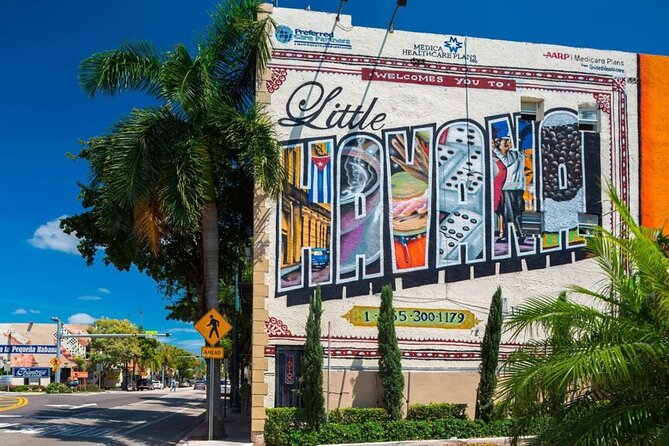
You meet at the Little Havana Visitor Center, 1600 SW 8th St, Miami, FL 33135. The tour ends back there, so you’re not trying to figure out your way across town at the finish.
It’s an English-language tour with a mobile ticket, and it runs in daylight hours (the entire experience is about 2 hours 30 minutes). Because it’s a walking format, comfortable shoes are your best friend. You’ll be on foot during the neighborhood segments, including the longer stretch for Calle Ocho.
You’ll also appreciate that the tour is designed for most people to participate, and service animals are allowed. Still, if you’re sensitive to heat, plan to move steadily and drink water on your own between stops, since only specific drinks are listed as included.
Stop 1: D’Asís Guayaberas and the Shirt That Means More Than Fashion
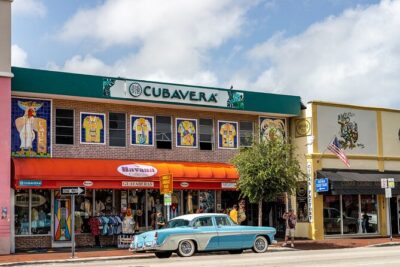
The tour begins at D’Asís Guayaberas, a classic Little Havana boutique known for the guayabera—an instantly recognizable Cuban shirt style with pleats and pockets. This stop works because it doesn’t treat the clothing like a random souvenir. You learn what the guayabera represents, and you see how the details reflect craftsmanship.
You can expect to:
- Learn where the guayabera fits into Cuban identity and heritage
- See how pieces are made with care, often using linen or cotton and embroidery
- Browse different colors and styles, from traditional white to newer interpretations
- Try on items if you want that “I’m taking a real piece home” feeling
What makes this stop valuable is the personal choice element. If you want a souvenir that isn’t generic, this is where you can pick one that matches you—fit, color, and detail. If you’re not shopping, it still gives you context for why the guayabera shows up everywhere in Cuban culture and Cuban-American community life.
One practical note: trying on shirts can be fun, but it can also take longer than you expect. If you want to keep the rest of your day moving smoothly, decide early whether you’re buying or just browsing.
Stop 2: Inside a Little Havana Cigar Factory (Hand-Rolled Process, Plain Talk)
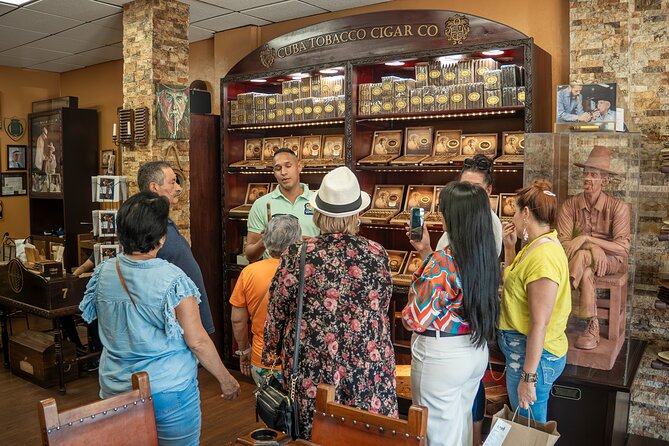
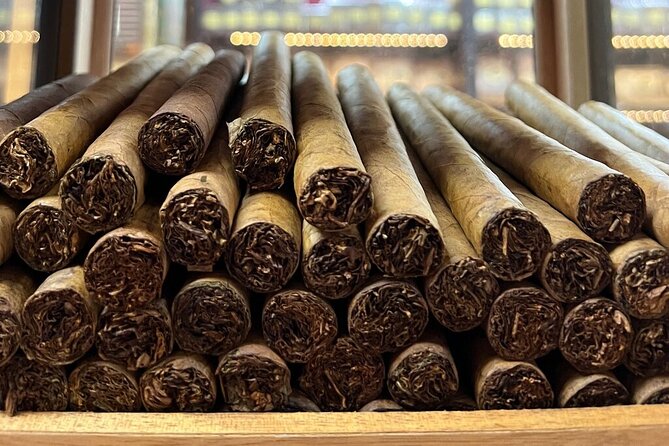
Next comes the Little Havana cigar factory, where you can smell aged tobacco and see cigar-making in action. You’ll watch torcedores (cigar rollers) work and learn the steps that go into a cigar made by hand.
This is the kind of stop where the details make the experience stick. Instead of just seeing someone roll, you learn what you’re looking at:
- How different leaves function in the cigar
- The meaning of filler, binder, and wrapper
- How cigars are rolled, finished, and stored/aged
You also get a chance to browse hand-rolled cigars for purchase. If you’ve ever wondered why cigars are talked about like a craft, this stop gives you the basics without turning it into a lecture.
Possible drawback: if you’re not into tobacco, the smell might be strong. It’s part of the experience here, but you can still enjoy the technique and the stories.
Miami at street level, more walks


Stop 3: Domino Park, Where Community Turns Into a Daily Ritual
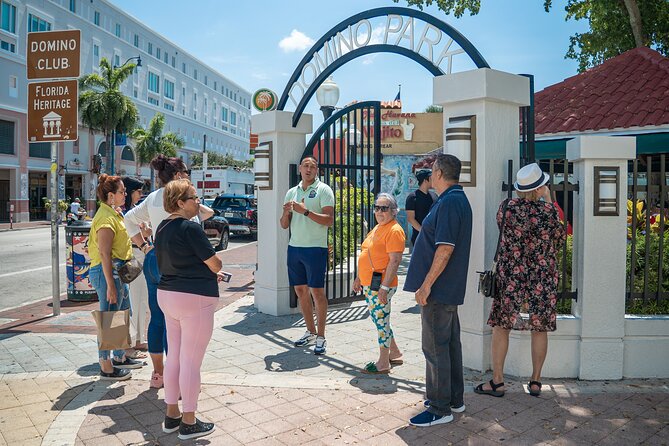
Then it’s off to Domino Park, the heart of Little Havana’s community energy. This isn’t a “history photo stop.” You’re watching how people actually spend time together—playing dominos, talking, and keeping traditions alive.
You’ll learn:
- How Domino Park connects to Cuban exile culture
- Why the park’s name ties to Maximo Gomez, a Cuban independence hero
- How the mood shifts from serious play to full-on laughter depending on the day
The best way to enjoy this stop is to watch first, then ask questions. The conversation around domino games is often the point, not a performance for tourists.
If you’re hoping for lots of walking-and-photo energy here, plan for a steadier pace instead. Domino Park works better as a pause and observe moment.
Stop 4: The Bay of Pigs Monument and the Weight of 1961
Next is the Bay of Pigs Monument, and it’s appropriately solemn. This pause carries the story of Cuban exiles who fought in the 1961 Bay of Pigs invasion—an attempt to liberate Cuba from Fidel Castro’s regime.
You’ll hear about:
- Brigade 2506 and the operation’s symbolic significance, even though it failed
- Why this moment mattered emotionally and politically for the exile community in Miami
- How names of the fallen are engraved on the monument
- Stories tied to the event that connect to Little Havana’s identity and activism
This stop slows the mood down on purpose. If you prefer lighter, comedy-style tours only, this part may feel heavy. But if you want the tour to feel real—more than just snacks and souvenir shopping—this is one of the stops that gives the whole experience meaning.
Stop 5: Party Cake Bakery and the Sweet Side of Cuban Daily Life
After the serious pause, the tour turns back toward everyday life with Party Cake Bakery. This is where the tour turns food-first, and it works because you’re not just “tasting.” You’re learning how Cuban bakeries function as community spots.
At Party Cake Bakery, you can expect:
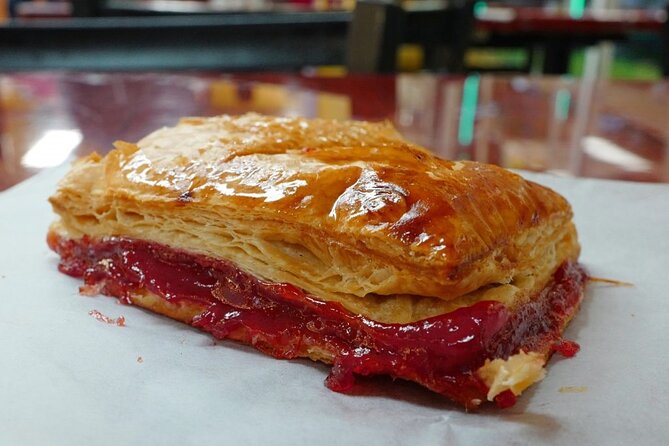
- Tasting traditional Cuban pastries like pastelitos de guayaba and croquetas
- Knowing they’re served fresh and meant to be eaten on the spot
- Learning why local bakeries are social hubs where people meet daily
- Meeting friendly staff and experiencing that everyday hospitality vibe
This is one of your easier stops to enjoy if you’re traveling with mixed interests. Even if you’re not chasing cultural sites, you’ll like the food break. And if you are chasing culture, you’ll appreciate how the bakery connects flavors to routine and community.
Tip for your stomach: don’t overpack with lunch right before the tour. Between pastries and churros later, you’ll want your appetite ready.
Stop 6: Churromanía for Churros and Dulce de Leche Comfort
Then comes the dessert break at Churromanía Little Havana, focused on freshly made churros. These are served hot and crunchy outside, softer inside, and you’ll choose from topping and filling options.
What you’ll be able to enjoy includes:
- Dulce de leche, Nutella, chocolate, and more (choices depend on what’s available that day)
- A quick reset from earlier stops, especially helpful if it’s warm out
- A short lesson on how churros became beloved across Latin America
This stop is a good “sugar tempo change.” Earlier you’ve had clothing, tobacco, and monuments. Here you get comfort food and a quick breath, plus a reason churros have become a shared street treat across cultures.
Ball & Chain: Music Club History Plus a Nightlife Sense of Place
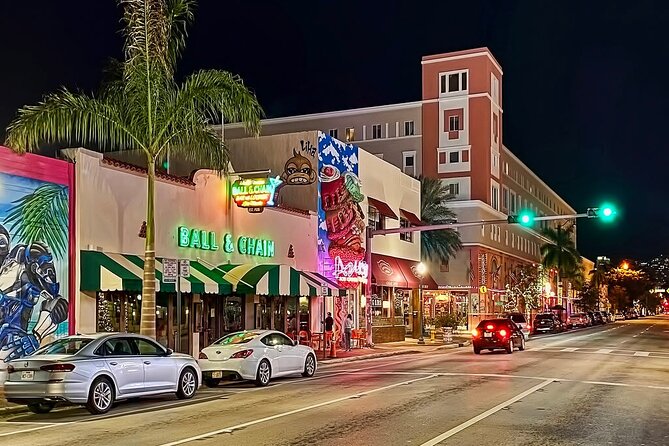
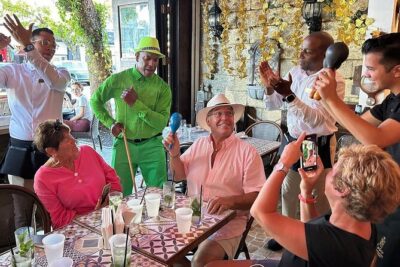
Next you step into Ball & Chain, one of Little Havana’s most iconic music venues. It started life in the 1930s, and it has hosted jazz greats like Billie Holiday, Chet Baker, and Count Basie. Today, it continues with live Cuban rhythms and salsa energy.
You’ll get to:
- See the historic, restored venue vibe and tropical decor
- Enjoy live Cuban music or salsa, often in the outdoor patio or main stage area
- Hear the story of how it moved from jazz-era glory days to today’s cultural hotspot
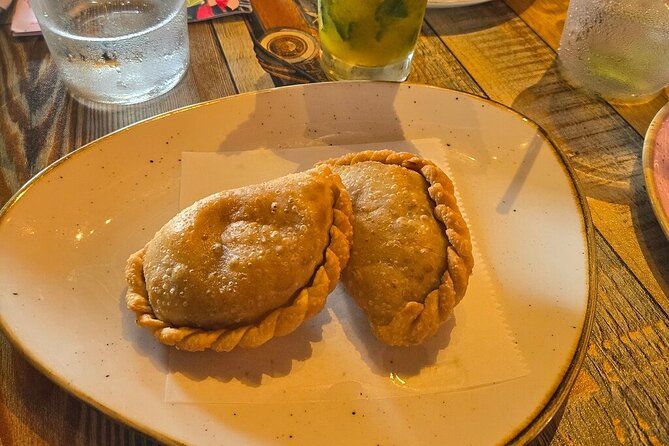
- Optionally sip a classic Cuban cocktail like a mojito or daiquiri (drinks not included unless part of the tour)
This part matters even if you’re not a “nightlife person.” It shows you Little Havana as a living place where music isn’t background noise; it’s part of the identity.
One practical consideration: if you’re not planning to buy a cocktail, you might still want to bring cash for tips and any extra purchases you choose to make. That way you’re not caught unprepared.
Calle Ocho Walk of Fame: Stars Embedded Underfoot
The tour ends with a walk along Calle Ocho, including the Calle Ocho Walk of Fame. This sidewalk tribute honors major Latin music, film, and cultural figures. It’s inspired by Hollywood’s Walk of Fame, but it focuses specifically on Latino stars tied to Cuban heritage and Cuban-American pride.
You’ll:
- See stars embedded in the sidewalk, including names such as Celia Cruz, Gloria Estefan, and Julio Iglesias
- Get brief stories about selected inductees and their connection to the culture of Calle Ocho
- Take photos right on the route, with the street’s energy around you
The best way to enjoy this stretch is to go slow enough to spot the names and line up photos—without blocking people behind you. It’s a fun finale because it ties everything together: music, identity, and community visibility, all on one familiar street.
Price and Value: What $69.99 Buys You in Real Terms
At $69.99 per person for about 2 hours 30 minutes, the value comes from the number of distinct experiences you get—plus what’s included to keep the walking from turning into hunger.
Your included items are:
- Coffee and/or tea
- Snacks with Cuban pastries
- Soda/pop guarapo
And the stops you go to aren’t generic shopping stops. You have:
- A guayabera boutique where you learn what you’re seeing
- A cigar factory with live rolling and leaf breakdown
- Community time at Domino Park
- A historical monument with story context
- Bakery tastings plus churros
What’s not included matters too. Alcoholic beverages (like mojitos) aren’t included unless part of the tour. If you want a cocktail at Ball & Chain, budget extra.
If you compare this kind of tour to paying separately for a guide plus food tastings, the grouping of stops is the value play. You’re paying for time, context, and access, not just walking.
Weather, Timing, and How to Plan Your Day
This experience requires good weather. If conditions are poor, you’ll be offered a different date or a full refund. The tour also has a minimum traveler requirement, so if that minimum isn’t met, you’ll be offered a different date/experience or a full refund.
Because it’s a walking tour, I’d treat it like a “core morning/afternoon block.” If you have a flight to catch right after, you’re asking for stress. On the other hand, if you build in some buffer time, you can handle any schedule nudges with less frustration.
Also, it’s a popular one: it’s booked on average about 35 days in advance. That doesn’t mean you can’t find space later, but it’s a good sign to reserve early if Little Havana is a priority.
The Guide Factor: When You Get Someone Like Danny
One review highlighted a guide named Danny, praised for being amazing: fun, friendly, and clearly strong on the details. That matches what you want from a tour like this. With stops that mix food, craft, and history, a good guide turns “things you see” into “why it matters.”
Even with an excellent itinerary, your experience will depend on the human layer: explanations at each stop, pacing, and how well the guide helps you ask questions. The small group size helps here because you’re not yelling over a crowd.
Who This Tour Is Best For (And Who Might Want Something Else)
This works especially well for you if:
- You want a first-time Little Havana tour that covers more than one “type” of attraction
- You like hands-on craft watching and food tastings
- You want a mix of culture and music without planning multiple separate activities
It may feel less ideal if:
- You don’t want any tobacco-related content (the cigar stop includes live rolling and a strong tobacco smell)
- You prefer only light, upbeat stops; the Bay of Pigs Monument is serious
- You’re expecting alcohol to be included (it’s not listed as included)
Should You Book This Little Havana Walking Tour?
I’d book it if you want a compact, high-impact day in Little Havana. For $69.99, you get a mix that’s hard to recreate on your own: guayabera storytelling, cigar making with leaf basics, Domino Park community time, a real historical stop, plus Cuban pastries and churros.
The biggest “don’t ignore this” point is weather and the possibility of changes if the minimum isn’t met. If you can keep your plans flexible, you’ll enjoy a guided walk that feels like Little Havana, not just a checklist.
If you’re aiming for one guided experience in the neighborhood, this is a solid choice.
FAQ
How long is the Little Havana Walking Tour?
It runs about 2 hours 30 minutes (approximately).
How much does it cost?
The price is $69.99 per person.
Where does the tour start and end?
You start at the Little Havana Visitor Center, 1600 SW 8th St, Miami, FL 33135, and the tour ends back at the same meeting point.
What language is the tour offered in?
The tour is offered in English.
What’s included in the price?
Coffee and/or tea, snacks with Cuban pastries, and soda/pop guarapo are included.
Are alcoholic drinks included?
No. Alcoholic beverages like mojitos are not included unless they are part of the tour.
Is the tour dependent on weather?
Yes. It requires good weather, and if it’s canceled due to poor weather, you’ll be offered a different date or a full refund.
How big is the group?
The tour has a maximum of 30 travelers.
Is there free cancellation?
Yes. You can cancel up to 24 hours in advance for a full refund.
Are service animals allowed?
Yes, service animals are allowed.
More Miami Trips We Have Reviewed
- Little Havana Food and Walking Tour in Miami
★ 5.0 · 8,882 reviews - Miami: Everglades National Park Airboat Tour & Wildlife Show
★ 4.5 · 7,296 reviews - Miami: Hop-on Hop-off Open-top Bus Tour and Optional Cruise
★ 4.1 · 3,077 reviews - 2 hrs Miami Private Boat Tour with Cooler, Ice, Bluetooth Stereo
★ 5.0 · 2,968 reviews - City Half Day Tour of Miami by Bus with Sightseeing Cruise
★ 3.5 · 2,747 reviews
More Tour Reviews in Miami
- Little Havana Food and Walking Tour in Miami
★ 5.0 · 8,882 reviews - From Miami: Everglades Airboat, Wildlife Show & Bus Transfer
★ 4.2 · 8,622 reviews - Miami: Biscayne Bay Millionaire’s Homes Sightseeing Cruise
★ 4.5 · 7,348 reviews - Miami: Everglades National Park Airboat Tour & Wildlife Show
★ 4.5 · 7,296 reviews - Miami: Hop-on Hop-off Open-top Bus Tour and Optional Cruise
★ 4.1 · 3,077 reviews
More of Calle Ocho
- Little Havana Food and Walking Tour in Miami
★ 5.0 · 8,882 reviews - Miami: Little Havana Food Walking Tour with Tastings
★ 4.9 · 1,181 reviews - Little Havana: Authentic Food and Culture Walking Tour
★ 5.0 · 679 reviews - Walking Food Tour of Little Havana with Cuban Dishes Tasting
★ 5.0 · 495 reviews - Little Havana Food Tour: Discover Iconic Cuban Cuisine in Miami
★ 5.0 · 308 reviews
Just Added: New Miami Reviews




Little Havana & Cuban Food Tours, compared.
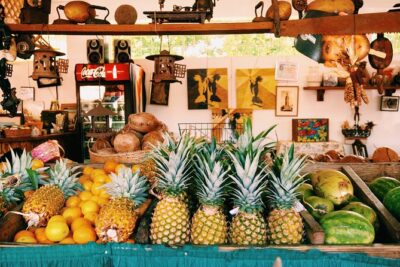 ★ 5.0Little Havana Food and Walking Tour in MiamiFrom $698,882 reviews
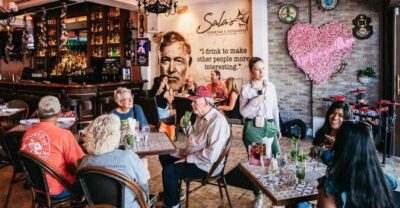 ★ 4.9Little Havana Food Walking Tour with TastingsFrom $691,181 reviews
 ★ 5.0Little Havana: Authentic Food and Culture Walking TourFrom $69679 reviews
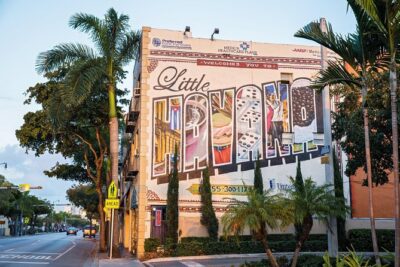 ★ 5.0Walking Food Tour of Little Havana with Cuban Dishes Tasting495 reviews
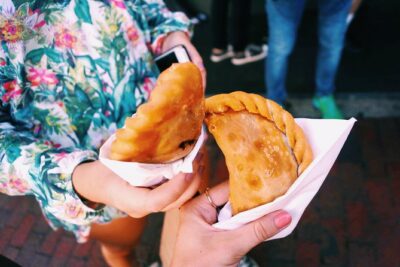 ★ 5.0Little Havana Food Tour: Discover Iconic Cuban Cuisine in MiamiFrom $69308 reviews
 ★ 5.0Little Havana Food and Culture Walking TourFrom $65297 reviews
 ★ 5.0Little Havana Like a Local: Food, Culture & Hidden GemsFrom $69252 reviews
 ★ 5.0Little Havana Small Group Walking TourFrom $62231 reviews
Browse the lists this tour appears in